

Your church has announced a new giving provider. A member who gives every month follows the new link and asks a reasonable question: “Do I need to set up my gift again, or will it keep happening?”
That question needs a specific answer before the member changes anything. A new giving link alone does not tell a donor whether an existing recurring gift has moved, whether it is still active at the old provider, or who must stop it.
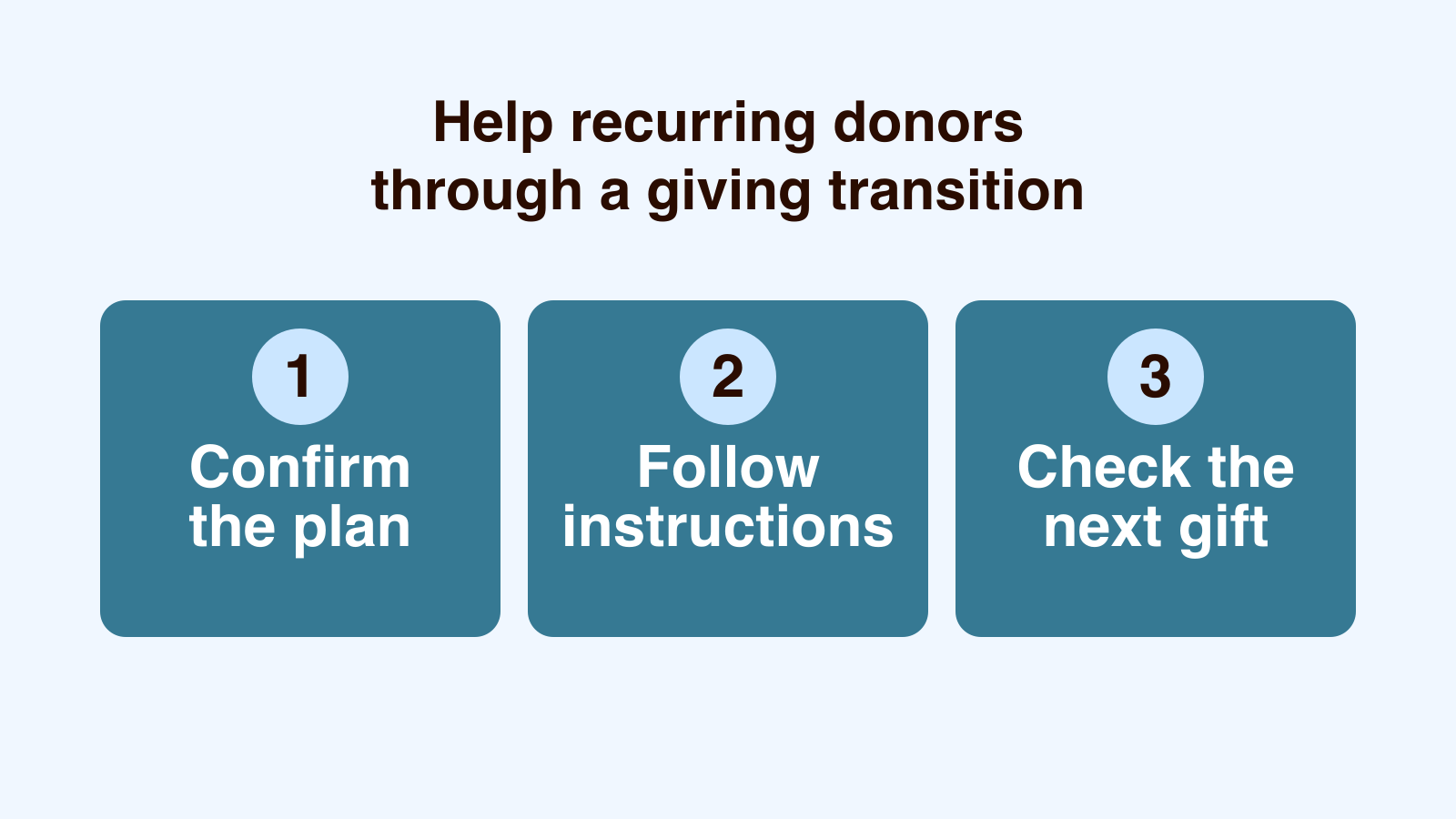
Your church can make the transition easier by giving each donor a clear next step. Start with what has been confirmed about that donor’s arrangement, then explain the action and how to check the result.
Follow one recurring gift through the change
Consider this illustrative example: a member gives $100 on the fifth of each month. Your church is switching providers before the next monthly gift. For this example, the church has confirmed that the member must create a new schedule and cancel the old one. This is a planning example, not a description of every transfer.
The donor needs to know more than the new web address. They need the agreed first date for the new schedule, instructions for cancelling the previous schedule, and a person to contact if either step is unclear. Without those details, “please start using our new giving page” leaves the most important part unfinished.
Do not turn the example into a universal instruction. Some arrangements may be handled differently. Confirm the plan with the providers before telling every donor to create a replacement.
First, explain what is happening to this donor’s gift
Give your team a short answer for each situation: the schedule is confirmed to transfer; the donor needs to create a replacement; or the transfer is still being checked. An unresolved arrangement needs a follow-up, not a confident announcement that everything is ready.
Keep three things separate when explaining the answer. Giving history describes earlier gifts. A saved payment method is the card or bank-payment arrangement used to make a payment. A recurring schedule tells the system when and how much to give. Having one does not by itself confirm the other two.
For the member in our example, the answer is straightforward: “Your monthly gift needs a new schedule. We’ll help you confirm the first date and stop the old schedule as part of the change.” Your team should supply the actual approved instructions before sending that message.
Then, make the next action easy to find
Use one church-approved starting point and a clearly identified support contact. Tell donors how to recognize the correct giving page. Avoid burying the action under several competing links or a long explanation of processing technology.
On the villaDeus transition page, the giving flow explains the change and offers donors a path to the old provider if they are not ready. It also reminds donors to cancel old recurring gifts. That reminder does not perform the cancellation for them.
For our member, the important action is to follow the church’s confirmed plan for the new $100 monthly schedule and the old schedule. They should not have to guess which date to choose or assume that submitting the new schedule also stops the previous one.
Check both sides of the change
Ask the donor to retain the available confirmation for each action. If the old schedule still appears active, or the new schedule shows an unexpected amount or date, direct the donor to the appropriate support contact before making another replacement schedule.
For our example, the intended result is one active $100 monthly arrangement on the agreed date, with the old arrangement stopped according to the confirmed plan. A reminder email or a click on the new giving link is not evidence that this result has been reached.
Your church should also plan a first-cycle check through its authorized staff and approved records. If something does not match the donor’s intention, investigate the specific gift and schedule. Do not tell the donor to make another payment just because the answer is not immediately visible.
Give people a short checklist they can keep
Your donor instructions should let a member answer these five questions:
- Has the church confirmed what happens to my current recurring gift?
- If I need a new schedule, what amount, frequency and first date should I choose?
- Who stops the old schedule, and what confirmation should I retain?
- How will I check that the next gift followed the agreed plan?
- Who can help if the schedule or payment does not look right?
Provide help without asking donors to send passwords or full card or bank details through ordinary email. Use the approved giving and support channels for sensitive payment information.
A giving transition is part of caring for the people supporting your ministry. Clear instructions respect their intentions and help your team answer questions consistently. If you are preparing a move, talk with us about your church’s transition. We can begin with what your current provider can transfer and what your donors will need to do.